Home » Archives for Gregor

Author: Gregor

(1996) is a German Eustorian with a study background in history and political science. After his Master's he is currently working as Mercator Fellow on International Affairs in the Western Balkans. He enjoys meeting new people, having discussions and fun together. Gregor is always delighted when he finds nice postcards in his letter box – they have got a place of honour in his room.
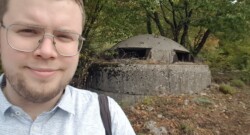
Gregor standing in front of a bunker in Albania.

#LivingTirana: Welcome to the Land of the Eagles

A capital city in radical upheaval. A coastline which can easily compete with Greece and Croatia. 200,000 bunkers for a country with less than three million inhabitants – reflecting the legacies of a Communist past that still shapes the country until today.

2020: With and Beyond Corona

2020 was the year of Corona - but there are many moments of hope. We share some of the our perspectives on this extraordinary year. 

Of Dogs, Virtual Discos and Civic Engagement. Young Europeans in Times of the Coronavirus Pandemic

The coronavirus is everywhere: in the news, on social media, our personal communication and even in our thoughts. High numbers of infected and dead people on the news frighten many of us as much as the lockdown impacts our societies, social and economic live. But this pandemic also brings solidarity and hope. Join us and get some personal impressions and little moments of light from our authors from all over Europe and beyond!

Voting4Europe: “I Feel More European than German”

What current and future challenges is the European Parliament facing? And how did the elected body develop in the first place? Gregor spoke with Mechthild Roos, who is doing research on exactly these questions.

Churches in Germany: From Absence to Presence?

Germany is not a religious state. It does not have a state religion or state church. The number of registered church members is declining year by year. But which role do the churches play in public discussions? What does being a practitioner of religion mean for a young German, and where to find interactions? Gregor shares his perspective on the triangular relationship between policy, churches and personal belief. “They are just coming for asylum shopping!” “Migration is the mother of all political problems.” Statements like these are regularly heard even by German establishment politicians. Our discourse on migration, refugees and asylum sadly becomes tougher and tougher. What was formerly unspeakable became a regular part of it. This trend in Germany’s public worries me. In times like these, it is important, that people and organisations raise their voice for humanity. A revived voice is the one of the churches, most prominently the catholic and protestant church – even though the number of official members of the churches reaches record low after record low and endorsements of political parties by church officials are part of the past. But currently – not only on migration – churches gain visibility beyond their own domains (classical: work-free Sundays). This visibility is not only about their social and charity work they do throughout their parishes and organisations such as Caritas or Diakonie, Malteser or Johanniter. They are taking a position for individuals, society, one could even state humanity. But why and to what extent does that matter for me as a believer? I am a Believer I am an active part of the catholic communities. As a catholic Christian, I need to share some of my general considerations, before reflecting on the policy-wise presence of my church: Why do I believe? And in what? Two very difficult questions, but they go to the core of my identity and social communities. I will keep it short. Firstly, there is the Christian message(s): Do not only care about yourself but also about your neighbour. Take those into consideration which are less fortunate than you. There is forgiveness for almost every mistake, if you ask for it, and there will be something after the life on earth. To me, these issues offer orientation (at least I hope and try so). They offer meaning and hope and something that I would call a ‘personal relationship to my God’. This, together with a personal, a local but also a worldwide community of other people sharing similar hopes and principles, is essential for me. Being a Christian believer in these times is everything but easy. In Germany and in Europe this is usually not about persecution or even structural discrimination as others have to face. But there are different, more internally rooted questions, which I deal with on an almost daily basis: Professing one’s Faith – a Problem? Only few of my fellow Christians in my age openly and freely profess their believes, especially when being in a more secular or even religion-sceptical surrounding. This is usually referring to a critical approach towards the institution: “Aren’t they all involved in child abuse? I cannot believe in such a paternalistic organisation! What can a 2000-year-old religion tell me today, wasn’t that only for farmers?” I frequently receive comments and questions like these ones when addressing my belonging to the Christian community. I do not ignore the first two types of statements even not believing in an organisation but in the above-mentioned message(s) together with a worldwide community. But questions of the third type make me vivid. Christianity has many ‘things to tell’ that go beyond spirituality and forgiveness. Those are to be brought in our political discussions. Let me give you an example: Religion in Dialogue A so-called Christian Occident, as referred to by many right-wing populists, to be protected from a “muslim invasion” does not exist. The tension between Islam and Christianity has – at least in Europe – found its official end after a difficult history: from crusades, the so-called Reconquista of the Iberic Peninsula, Ottoman dominance in the Balkans for centuries to a provoked, bloody conflict in the Western Balkans 1990s. Today I am happy that Christian-Islamic dialogue is not only existent but openly promoted for example by the German Bishops’ Conference and its CIBEDO (Centre for Christian-Muslim Encounter and Documentation) already founded in the 1970s. Institution and Belief Besides professing and acting accordingly, there is a second problem approaching. It is important to me not to look away when it comes to my church as an institution. In Germany, but as well in other countries from Chile to Ireland and many others there is more than one issue with the question of hierarchies, power and power abuse. The most obvious expression of this is sexual(ised) abuse. I am shocked, worried and feel helpless when hearing and reading about this. This church, my church, has structural problems. Serious ones that make it sometimes almost impossible to transmit its important to joyful key messages. One could wish a public absence of the church being ashamed of these happenings. But instead, I feel the need to be active myself in discussions and in its fora to initiate change regarding these incredible grievances. If I just pose this task to the cardinals, bishops and other responsible leaders, I would be sustaining the same structures which I believe to be reformed. Becoming a more Political Church This is the point, at which I would like to return to the policy arena and the question of migration and asylum from the articles’ beginning: Independently of structures, I like my church – lay believers as well as officials – to be active in the political sphere. The Church Asylum granted by catholic and protestant parishes is just one out of many opportunities to welcome, protect and integrate individuals regardless their personal belonging, history or belief. The Christian churches were always those which should be caring about the weakest in our societies – be it the old, the poor, the sick or the strangers. For humanity. That is what I believe in and want me, my fellows, and my church to stick to. I like and support statements such as “referring to Rule of Law does not mean making law more restrictive”, “do not consider migrants firstly as workforce” or “do not distinguish sharply between ‘real’ asylum seekers and economic migrants”. These contributions by the church into current debates are heard – especially because they have become rare in the general discourse in my country. A Church Shaping Debates From this perspective, I really want my church to be a political one, one that can shape debates. Not for its own interest, as it sometimes did for example in the so-called Kulturkampf (engl. Cultural struggle) 1872 to 1886, but for its messages and principles, without imposing them as the only truth to decision makers. I guess that “my” Christianity has a word to say here, a serious contribution to make beyond parties, individuals and non-governmental organisations. The human- and dignity-centred principals of catholic social teaching focus on their own interpretation of principles like solidarity, subsidiarity and social justice. One can discuss these interpretations but all together they are arguing for societies which are orientated to the Common Good. This is a hard task, an inconvenient one! Working for a Common Good Churches have not been proving to do only good in the world: They have many problems themselves, but they are still an important force and political player. I do want my church, my communities to be active and political, to work for a Common Good higher than personal interests and benefit-risk assessments: We have a say in current advocacy for the preservation of creation (meaning environment protection in non-church language), the fight for a more social Germany, Europe and world or in promoting fair and respectful partnerships in a faster and faster globalisation. This Common Good is not a “nice to have” thing. In my opinion it is what all Europeans, all humans regardless their personal faith can and should work on. This should not be imposed; not everyone has to share churches’ perspectives on these questions. What I wish anyways, is the mindset as a central question to be shared: Only together we can save our human Europe.

tweet; Paris Peace Conference

1919: A Special Blue Carrier Pigeon of Peace

How to lose one third of your empire in 140 characters? Today we can hardly imagine the political sphere without daily tweets and constant online communication. Imagine how political life and our world would have looked if social media existed 100 years ago! What insights could we gain, which are different from the usual official statements? We are inviting you to a social experiment: During the EUSTORY Summit 2018 young people from Europe and beyond took the roles of the statesmen of the Paris Peace Conference 1919 to negotiate the Treaties of Trianon and Versailles. Let’s have a look behind the scenes of these negotiations which ended World War I and follow a special Twitter-thread.

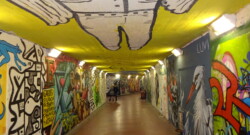
Graffiti in Tunnel

#livingFlorence: Choir and Constitution

The EU Commission is planning to treat young Europeans to free Interrail tickets to promote first-hand experiences of different countries in Europe. Gregor, a student of political science and history from Germany, did not wait for this new programme to start. He just returned from a six-month study trip in Florence and reflects on some of his experiences with Italian habits, cultures, cuisines and specific perceptions of the world. #livingEurope! #livingFlorence! „… vi ho portato qualche dolce tedesco per salutarvi. Ancora una volta: Grazie mille per un tempo indimenticabile con voi!” – With these words I finished my short, improvised speech to my fellows of Florence University Choir. While giving out some of the sweets I brought from Germany, exchanging last contact information and ensuring each other to meet soon in Italy or Germany, I have been surrounded by almost 50 of the people I had spent a lot of time with in my six months as one of 330 000 people using Erasmus every year. Especially in the first days I felt some kind of “Erasmus-bubble”: Arriving in Florence, I hoped to have experiences like that with my choir, but I didn’t expect it anymore after my first days. Besides searching for a flat in my new hometown for six months, I tried to get to know the place and some new people to spend the upcoming time with. The first and obvious possible group consisted of the always present Erasmus associations. In this way I spent my first week almost entirely with non-Italians. Talking English and German instead of Italian. I met very nice people – but I haven’t been able to free myself from the bubble. A Flood of Voice Recorders and Other Encounters All my courses were in Italian, since the only one in English I had chosen was already full. Having attended the first class, I realised that at least one third of my fellow students left a voice recorder on the professor’s desk. Did I have to record as well? I decided not to. Sitting in that class, I did not search for the internationals, but I talked to Italians. At least a little. When seeing the same people twice or thrice a week, we came in closer contact, met for a coffee after lessons, went out for an apericena in the evenings or did a day-trip in the weekends. Besides these I familiarised myself with the ‘Italian way of life’ by joining the above-mentioned Florence University Choir, sharing a flat with two Italians and learning once or twice a week in a language tandem with an Italian PhD-student. In the beginning I was not able to get how Italians can eat a meal with up to seven courses. But smaller portions and the experience of slower, more talkative dinners taught me a different way of eating. Dreaming in Italian Another issue concerns the gesturing: Until today both my body and my face start moving when I switch to Italian – even if I do it in a different manner than ‘real’ Italians. And while first being worried about my first visit to an Italian hairdresser (“Will I be able to describe what I want? Will my incapability lead to a hair-desaster?’) and discovering a wonderful city with traffic sign-art and amazing graffiti, I more and more got the Florence-spirit. These developments culminated in two experiences: After a couple of months I started to speak Italian instead of German in some of my dreams and I – accidentally – addressed one of the guys I knew from my Erasmus-association activities for almost two minutes in Italian, even though he did not understand it. Living in the Campaign Besides personal encounters and getting into a more Italian way of life, my semester in Florence also meant doing an Erasmus in the middle of an electoral campaign. No votes for a parliamentary or presidential election were casted, but a large-scale constitutional reform for the country of the Dolce Vita had been discussed. I arrived believing that the government of the Partito Democratico of Matteo Renzi between the right-wing politicians of the Lega, Berlusconi and Beppe Grillo’s Movimento could be the only sensible and pro-European. Later I realised this perspective is quite a German one. Knowing the rusty, overstretched political system of my host country for a semester, it quickly became clear: even if the reform proposal has its faults, didn’t it still mean a clear improvement of the situation? I discussed with Italian classmates, attended information and election campaigns, followed the relevant election programs. Extending my German Perspective But I just got it when, finally, a good Italian friend told me: “In Germany this might work, but here …”. I was able to familiarise myself deeply with the technical details of the reform proposal or to approve of it for political reasons. But I had not yet been with the Italians, with their concerns, which were not always rational, but based on years of experience and disappointment with their political system: Whilst some of my Italian fellows connected the immunity of parliamentarians to problems with fights on nepotism and corruption, I still saw (and see) it primarily as protection for the political actions of the members of parliament. Taking into consideration this and other examples we argued on, I really had to change my point of view, considering not just other arguments – but other thinking patterns. Even though, if Italians asked me as a student of political science how to vote, one thing was clear to me in the end: as a German, I would have voted “Yes” in any case, but maybe as an Italian – following the majority – with “No”. I hope that I can preserve this thinking beyond the concrete question. This would not only support me in feeling more European – but as well to act and argue more European. After saying “Goodbye Florence”, it is now time to say “Goodbye Rome” after having had the chance to do an internship in the capital. But the story of Gregor and Italy isn’t over yet. Neither is it the story of Gregor and Erasmus+: An internship in Brussel is already scheduled… #LivingFlorence Where to go as foreigner to meet real Fiorentini? NOT to the city centre. I’d recommend the Parco Pettini Burese, a small, public park in the quarter of ‘Alle Cure’. Under the olive trees you’ll find the perfect place for a picnic – far away from tourist routes. What surprised you the most? The city centre. In my first days searching for a flat and discovering Florence I’ve been shocked to hear more German than Italian over there. What annoyed you the most? How would you suggest another foreigner to behave, in order to avoid the same difficulties? The bicycle lanes. As a student from Münster, Germany’s bicycle capital, I hoped to ride one as well in Florence. Having found a flat, buying a bicycle and a lock have been my first investments of the Erasmus semester. After some shocking nearly incidents and bicycle lanes ending in the middle of the street, I stopped it. I’d just suggest to go on foot – Florence is not that big – or to move to a quarter with better lanes …

From South to North: new-old European Winter-Time Recipes

Christmas stories and recipes from Europe and beyond to make you laugh and that will keep you warm during the cold winter days. Are you into baking? Try these recipes!