Author: Gregor

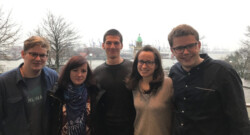
(1996) is a German Eustorian with a study background in history and political science. After his Master's he is currently working as Mercator Fellow on International Affairs in the Western Balkans. He enjoys meeting new people, having discussions and fun together. Gregor is always delighted when he finds nice postcards in his letter box – they have got a place of honour in his room.
Editors’ Diary. A day in the Life of a EUSTORY History Campus Editor

In December, the EUSTORY History Campus Blog is calling for new members of its Editors’ Group. Do you want to know what the work of an Editor for the blog looks like? Gregor, Editor since 2015, gives some insights into a typical month of an Editor. 1st of March: Our coordinator is asking us for a possible editor’s video conference of this month. I check my schedule and fill in the Doodle. Afterwards I am getting back to one of my articles I am currently writing – it is on my experiences abroad in Italy. Hope to finish it within the next days. 5rd of March: Finally, I get to finish the article. While it is already send to our journalistic advisor for a check, I am looking for fitting images and links for the background information. I receive the mail that our video conference is supposed to be in three days, 21.00 ‘German time’. “Feeling the pulse of Europe” – Milan 8th of March: I am preparing some notes for our editor’s conference. What are actual projects? What is to be issued organisation-wise? Is there anything to plan longhand? I remember that I need to contact one of my authors. She promised me a contribution for two days ago… But now the call is starting. After some technical issues (like always) and a warm hello to everyone we are discussing the articles to be finished in the next month. I give in my piece on Italy that I finished some days ago and we decide that it might fit in about a week. Furthermore I issue that I am looking for an author writing on current happenings in Estonia – and get two possible contacts. After deciding on actual projects, we are as well discussing organisation issues such as unavailibilities and upcoming events. After the call I am writing my author again for the promised text… A MIxture of Emotions 12th of March: I am receiving my edited article on Italy – and unfortunately a mail by the Estonian author. She won’t be able to write it this month because of university issues, but is asking me to re-contact her afterwards. Let’s see, if we’ll have that article. In the evening I am introducing the changes to my article, afterwards I am inserting it in the backend of the blog and ask for the confirmation to publish it. 16th of March: My article is published. Having shared it in social media, I finally get the opportunity to contact my possible authors for Estonia. Shortly later I get the first response: She is interested in contributing! We agree on a skype call to talk about a possible format and focus of the contribution. 20th of March: Skype call time. After discussing the possibilities with my new author and sending her the principal material (guidelines etc.) we agree on a date for a first draft: In one week. I am satisfied and optimistic regarding the possible contribution. A Motivating, European Experience 26th of March: A week nearly without the HistoryCampus – I’ve just been checking our Editors forum and reading the new contribution published by one of my colleagues two days ago. But now I receive the first draft of the Estonia-contribution: Contentwise I am really satisfied, but the structure is still making me worry. How about putting the centre-paragraph in the beginning? Couldn’t we make this fact a bit catchier? I send my editing suggestions to our journalistic support, hoping for some additional remarks. 29rd of March: After another review it’s now time to give the article back to my author – I am already curious how she will like the changes. I am as well asking for images, because they were missing that topic before. 3rd of April: Incredibly fast I receive the new version of the Estonia-contribution. Now it is ready for publishing – I prepare it in the backend and ask another time for a publishing confirmation.   You think about joing the Editors Group? Check out our Editors Call.

Coalition for Some Brighter Future?!

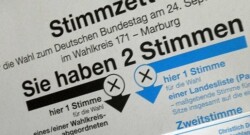
Losses for both governing parties, right-wing-populists for the first time in the Bundestag (parliament) – the results of German elections some weeks ago remained issue of many debates. But what about the future government? Gregor is sharing some of his thoughts and opinions on this issue. GroKo is dead. The ‘Große Koalition’,  a coalition of Conservatives and Social Democrats, has been governing Germany for four years with Angela Merkel as head, but after an(other) historical defeat the SPD of former European Parliament President Martin Schulz decided to regain power in opposition. Now it is up to four parties – two conservatives (CDU and CSU), a liberal (FDP) and the Greens – to work on a successful coalition agreement. But they gave up their talks after some weeks. A retrospect on this possible coalition: Back to the Late 1990s? The last coalition with the Greens has been seen as a government of hope, of awakening after 16 years of Helmut Kohl being German chancellor. Especially younger people saw it as a ‘wind of change’ for good-old Germany. Joschka Fischer on whom we reported some weeks ago as foreign minister has been one of the idols of that period. Twelve years after Merkel gained power, the Greens have once more the chance to be part of the government. This time, there has been a serious number not only of my friends hoping for a new government – not lead by Martin Schulz; but by well-known Angela Merkel. She should have been governing with the Greens – but without the Liberals. Without a new chancellor and without any new green idol. That would have meant the perfect combination of continously competent administration and some innovation not only for the generation rose during the eternal reign of Angie. Enemies Becoming Partners As the elections results do not allow this ‘dream-team’ to assume office, the Liberals – in Germany classical coalition partner of the Conservatives and stylised direst enemy of the Greens – had to enter the coalition talks for a so-called Jamaica-government: Jamaica’s flag has the same colours as the parties probably joining the coalition. Their charismatic leader Christian Lindner brought the party back to parliament – probably immediately as well into government. The question is now: Could the possible government be a coalition of innovations? What are main obstacles to reach the needed four-party agreement? I would just like to share two spotlights with you, which might as well be very relevant for Germany’s international partners: 1.001 Questions on Migration After the so-called ‘long summer of immigration’ Germany and Europe have done their best to arrive back to an ‘eternal winter of borders’ – known from the Cold War as one of the exceptional periods nearly without uncontrolled migration in European history. The positive German Willkommenskultur is not dead, but is at some point hibernating. The success of the AfD mainly caused by the party’s argumentation against ‘mass-immigration, Islamisation and loss of German culture’ allows only a spot on German public, but wide parts of the population and politicians not only from the right criticise Angela Merkels crisis management in 2015 – the Greens remain almost the only party supporting the wide acceptation of refugees. Facing now the coalition talks, one could easily identify two main conflicts in the wide field of migration-questions: Do we need a maximum number (‘Obergrenze’) as requested by the CSU for refugees in Germany? Does Germany need an Immigration Law, as demanded by Liberals and Greens, and if yes, how to design it? A ‘Obergrenze’ The question of a ‘Obergrenze’, a long time disputed as well between CDU and CSU, seems to be partly solved: the two conservative sister parties agreed on an orientation number of 200.000 successful asylum seekers. Liberals and Greens refer to international law arguing that a limitation of shelter is not foreseen. As both parties – in contrast to the Conservatives – want to forester an Immigration Law, even if they do not agree on its details, to differentiate clearer between work migration and asylum, one could see a possible compromise: Introducing the legally non-binding orientation number the conservatives would somehow be satisfied. An additional Immigration Law allowing easier, legal paths for work-migration could help out getting the support by Greens and Liberals. Closing the Window of Opportunities for the EU? ‘We are Europeans and believe in the ideas of European integration.’ – A sentence that might have been said from almost every politician of the future Jamaica coalition during the electoral campaign. Everyone expresses, that he or she is closely linked to European Union. But saying so, politicians have very different perceptions on what European Union could look like. The Conservatives mainly want to continue running the European Union as it is: A union of states. By single projects such as a Defence Union or a European Monetary Fund a further integration might be on the schedule – but without changing the treaties. In contrast to Greens and Liberals who are advertising a European Federation. The Greens want a more social and ecological Europe, setting high standards, fighting climate change and reducing the agricultural subsidies at least for large-scale enterprises. Let’s Hope for the Best Results Possible The FDP is also fighting subsidies in general but wants to install further free trade agreements as CETA or TTIP and to strengthen the subidiarity of the EU, including possible re-transfers of competences. The even more critical point is that the party argues to stop money transfers to the victims of the Euro crisis as Greece and is fighting for a strong austerity policy which might lead to serious dissent within the possible coalition. There are even speculations that the Ministry of Finance will be split in a budget-related and an international policies part if a Liberal will become minister – not to endanger a stable and at least somehow supportive Euro-zone. This is as well to be felt reconsidering the visions for Europe introduced by the French President: While the Greens are supporting Macron’s ideas for Europe’s future nearly without constraints and the Conservatives felt prepared to make some concessions after labour market reforms, the FDP does not support the economical and financial ideas of Macron at all. We see: European Union will be a hardly negotiated issue. Let’s hope for the best results possible – even if it is hard to make a prognosis. After all it will be important who apart from Angela Merkel will co-design Europe’s policies as finance and foreign ministers.    Hopes Beyond Migration and Europe are not the only critical issues to be solved in the upcoming coalition talks, but there are other aspects brought in by Greens and Liberals that could mean important steps for Germany’s future such as the digitalisation of administrations or new, more consequent concepts fighting climate change. Even if important questions e.g. the reform of the pension system will remain unresolved the Jamaica-government could be a successful one. I wish the awakening making Germany ready for its future to be voted in 2021 then – with the beginning of the post-Merkel-era. Edit: After the failiure of the Jamaica-talks another GroKo, a minority government or a snap election are possibilities – no guess what might come out of the current situation.

Am I of the West?

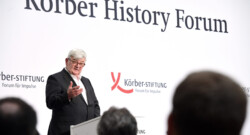
Joschka Fischer, once perceived as symbol of a new political era, is now writing books and giving speeches on political crisis, the West without a leader, democracies in danger. For younger people, he is already part of history, as far back as the revolt of 1968. Gregor Christiansmeyer is responding to Joschka Fischers thesis on “the End of the West” and reflecting his feelings when meeting a political leader with perspectives on politics different from Gregor’s generation. Seeing me wearing my suit the receptionist of the Humboldt Carré in Berlin is indicating me the way in direction of the stairs wordlessly. I am passing by several security managers and entering the reception zone. I am one of the earliest to arrive at this year’s Körber History Forum (#KHF2017), feeling a bit disorientated, lonely in these rooms. Do I wear the right clothes? Whom to speak to, if you do not know anybody? The opening in the well-filled Carré is to be delivered by a pre-Merkel-politician. In these dimensions somebody that I mainly know as history – not as active in my personal political world. When Joschka Fischer became minister in the first social democrat-green government on federal level 1998 I was just to celebrate my second birthday. But images – of a minister in trainers – still offer a spirit of an awakening, some kind of political pioneering spirit. And this continued partly also throughout Fischer’s mandate, just exemplary thinking of his speeches on a federal European Union.  At least for that day, Fischer’s ‘time of trainers’ seems to be over. A Concept?  “The End of the West as we knew it?” – a quite ambitious issue chosen for this keynote speech. But what does “the West” mean? Is it an expression of the fight for or status being liberal democracies? Is it limited to the good old US-West European transatlantic friendship or is there a wider understanding possible? Does the West require an East? If yes, is this still an appropriate perspective to look at our globalised world? Who is in – and who is out? Finally: What’s the role of the European Union in this concept? All those have been questions in my head before the start of the Körber History Forum. To me personally, the West is a multi-dimensional concept. One can identify thoughts, governments, lifestyles or persons as Western, but a state? Maybe that has been possible in the Cold War – but today? The West is not the Occident Joschka Fischer starts his speech by cutting the question mark of the speeches’ title. In this way the end of the West is already executed. I am a bit disappointed, hoping to hear him mentioning arguments for both perspectives (end or not-end) before. This reminds me a lot of his book ‘Is Europe failing?’ (german: “Scheitert Europa?”), published in 2014. But I continue listening. Fischer lines out that in his perception the West does not mean the Occident. The West has – from his point of view – been founded in 1941 with the Atlantic Charter (by Churchill and Roosevelt) and continued up to our days in the NATO as a political and security alliance. The West as a community of fate. Political awakening sounds different. Mrs Franziska Augstein sitting next to me is smiling. Later she will question parts of Fischer’s perception. Like always during the Körber History Forum she is giving some cough pastilles to her neighbours.  Fischer meanwhile proceeds by diagnosing that (t)his community of fate has started its self-abdication, its self-destruction. The Brexit and the presidency of Donald Trump causing a loss of confidence in the security guarantees are crucial to him.   Security Makes the West Security. That turns out to be one of the main topoi of the former politician’s speech. The end of the West as we knew it as the end of stabilizing security guarantees for Europe. But what does being Western mean to me, might furthermore mean to politicians? Or am I doing a mistake by mixing up my identity as European with the concept of the West? I do not state that Fischer is wrong with the statement that the concept of the West is radically changing, but I guess we need to reflect that on additional levels, especially on more individual ones: The success of populists being voted, the loss of trust in our democracies, growing nationalism and blaming globalization for everything. All these aspects challenge our Western societies. They challenge shared values and ideas. They change our image of the West – the image of ourselves. Observations Seeing the radical protests against any form of free trade, following the tragedies of human dignity being stepped on at European borders or watching Western and Westernised societies losing their plural discourses makes me worry about the future of the West. The future of its values. But that does not mean that we are left to resignation. We need to be awake, be aware of these changes and we need to address them critically, not only in our social bubbles – but beyond. In my opinion, what we should not do is just worrying and leaving the serious question marks on the West to our politicians. The West is not (only) about security. It is about our societies and economies; it concerns every one of us. When Fischer states that Europe can’t stand on his own, that it needs the West, I counter that Europe is not alone: there are millions of Americans – as well as many others – fighting together with it. Maybe there is an issue on the global leader’s level, but we still are societies of citizens and we should not allow the world politics to overcome the principles we belief in. There are difficult times ahead. Fischer has been an idealist in his youth, became a realist while being politician, but now – at least according to his speech and other recent statements – he has become a pessimist. Even if he still believes in certain values and ideas, he does not seem to believe anymore in their realisation. He has lost his pioneer spirit. One does not need to be super-optimistic looking at the future of our Western democracies – neither am I – but we need to give them a chance and we need to fight for them. About Time for Another 1998 Maybe it is time for another 1998, not only in Germany but in civil societies of the whole West. There are already relatively young politicians like Macron, Trudeau or Varadkar mixing up the West, but we still lack of young faces and visions for our future – not just by career politicians (like the as well young Austrian Kurz) and well known faces. Let’s be active and create a new political awaking – it does not have to be perfect, we just need to start! Am I of the West? Yes I am – and we are! Additional Links Video of Fischers Keynote Speech on the Körber History Forum 2017 Fischers Speech on the Future of Europe (German text edition) See as well #KHF2017 in the social media.

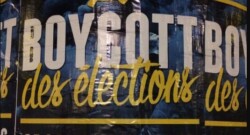
#callFrance: Whom to Vote for? Vote at all?

We asked two French women on their perspectives towards the French elections of 2017.

#CallNetherlands: Elections in the Netherlands – end of EU as we Know it?

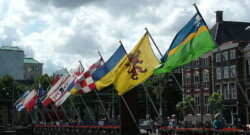
2016 saw the rise of populist leaders in Europe and beyond. Can this year be worse? The elections in the Netherlands might be a first thumbnail on Europe’s future. Two Dutch women share their political perspectives with us. The Netherlands are going to vote Wednesday, 15th March. Economic growth, rising living standards and shrinking numbers of unemployment – according to these socio-economic indicators one could valuate the coalition of  Premier Mark Ruttes  right-wing liberal VDD and the social-democrat party PvdA as successful. But the polls and the media discussions see the right-wing populist Geert Wilders and his PVV on the rise. With anti-immigration and anti-EU campaigning he is dominating complete parts of the discourse. What does the Netherlands youth think on the upcoming elections? Are the Netherlands at a crossroads? If yes, where to proceed? Two young women, both being active in Dutch politics, share their perspectives with us.  There is Carola, a 25-year-old supporting the relatively new funded Forum voor Democratie, a right wing party fighting not only for direct democracy and limits for migration. Our second interviewee is 24-year-old Dyonne currently doing her Master at Leiden University. As member of the social-liberal and progressive Democraten 66 (D66)  she is favoring an open, even federalist European Union. Geert Wilders and his Partij voor de Vrijheid  Geert Wilders and his Partij voor de Vrijheid (PVV) are dominating foreign media reporting on the upcoming elections. Is this also the case in Dutch media? Carola: Geert Wilders’ popularity is the elephant in the room the media do not like to talk about. In comparison with other established parties, not much attention is given to the PVV. Surely, this is also related to the fact that Wilders refuses to take part in most TV-debates. Yet, in general, the media’s image building of the PVV is negative. There seems to be a huge gap between the perspective of the political media landscape and the off-screen points of view of the ‘common people’. Dyonne: No. Of course he is present in news coverage on the elections. However, other politicians are far more visible than him. Mainly, this is because Wilders has refused to participate in, or cancelled, most television debates. To me, it just makes no sense a national politician can get away with that. He is currently leading one of the largest political movements in the Netherlands, but refuses to enter discussions with other politicians. A Closer Look at Political Visibility and Strategy From a strategic point of view however, I understand his decision. The lack of media coverage on the PVV is often presented by Wilders and his supporters as evidence for an anti-Wilders propaganda agenda of the traditional media. […] This puts him in a unique position since the only way he communicates with his electorate is through social media, most importantly Twitter. Also, his official campaign program is only one A4 page long (compared to for example the D66 program with over 260 pages). This has allowed him to create his own narrative, which has led to a situation whereby a lot of people have projected their own hopes and beliefs on Wilders and his PVV. The moment he enters a debate and is forced to be more explicit about his political priorities and how he hopes to realise them, he will lose people who have projected their own beliefs on him. Political System of the Netherlands The main political decisions in the Netherlands are taken by the Dutch Parliament, called STATES GENERAL. From two chambers the Lower House (Tweede Kamer) is more influential and decisive concerning national policies. The 150 seats are distributed in a proportional way to the parties participating in the elections. As there is no extra threshold, usually a huge number of parties get elected to parliament – in the last elections 2012 eleven parties were able to send at least two delegates. The political landscape is according to this fact quite subdivided as many parties come up as split ups of former parties. This complicates also the coalition negotiations – a problem expected to be even more difficult after the 2017 elections. An actual issue for many political discussions are the numbers of migrants. Their percentage is with 11.8 of the population (from which we have still 3.1 percent EU-born migrants) not exceptional and has only slightly raised in consequences of the ‘refugee-crisis’ 2015/16 Understanding the Roots of Wilders’ Success Do you also see Wilders’ success as most important question in this election or would you like to have more reports on other topics? Carola: Much more attention should be given to what has caused the emergence of Geert Wilders’ success. It did not come out of the blue. I believe a great percentage of the Dutch population feels disappointed, frustrated and disillusioned with politics. At present, this chronic disappointment is finally finding some outlet. Wilders is regarded as a politically-incorrect but authentic politician. Politicians of established parties often appear to be true to their word before the elections, but soon enough they break their promises when they are put to the test. The last couple of years have showed this again and again. Wilders’ success is, therefore, possibly the most important question in this election. Many PVV-voters keep their affinity for the PVV to themselves for fear they might lose their jobs. These are distressing trends, which are not discussed in the media. People should be able to publicly discuss their concerns about the future of our society, without worrying about putting their career at risk. Otherwise, it puts a lot of pressure on our open society and our rights such as freedom of speech. Dutch identity Dyonne: I believe Wilders has been one of the driving forces behind the main questions of this election. The main questions this election are concerning Dutch identity and the related question what kind of nation we want to be and how we want to be perceived internationally. What does it mean to be a Dutch citizen? Can anyone become a Dutch citizen? Are we a nation known for tolerance and inclusiveness or do we have to protect ourselves by closing our borders and tightening our immigration laws? Are we working together with the European Union or are we fighting to retrieve some of our sovereignty? However, Wilders is not solely influencing the answers to these questions. Influence of Figures like Wilders and Trump And, even though most of what his party says or does is making me extremely angry and sad, I have to admit I sometimes thank people like Wilders and Trump for also bringing out the absolute best in people. Over the past months, their anti-EU, anti-Islam and anti-immigration agenda has inspired a counter-movement of thousands of people all over the world to become way more vocal in their political preferences. […]. For me personally, Trump’s victory was a tipping point as well. I woke up, completely flabbergasted, and I felt the urgency to do something. I was not sure what, or how, or when, but I knew that this was the right moment to ‘come out of the closet’ as a D66’er and try to prevent a similar situation from happening in the Netherlands as had already happened in the US and UK. Mobilising for Change and Positive Responses And the most wonderful thing, is that this was not just me, but a sentiment felt throughout the country. In my opinion, plenty of Dutch citizens who are not agreeing with Wilders have always underestimated the power he could potentially obtain in Dutch parliament. Hardly anybody can actually envision Wilders becoming prime minister of the Netherlands. However, Trump’s victory proved all these people wrong and underscored the urgency to voice a different opinion. In addition, all media coverage on the immigration crisis and hard words used by Wilders (he referred to male immigrants as ‘testosterone bombs’) has led to hundreds of Dutch citizens to volunteer at refugee centres. So, a lot of good things are happening as well. Dynamics of the Electoral Campaign How would you describe the way the electoral campaign is held? Does it change/influence Netherlands’ society? Carola: The political establishment including the mainstream media fails to sufficiently address the concerns of the people. Is the European open-border policy compatible with the preservation of our nation state? How much has (mass-) immigration cost us? To which extent is the absence of integration leading to parallel societies? Is the structure of European Union democratic? Is the euro functioning properly? What does it mean to remain in a Eurozone with southern countries such as Greece and Italy, and how much will it cost us? To fail to address these and other concerns means to lose the trust of the people. This is exactly what has happened in the last couple of years: the trust of the Dutch people in politics and in the media has declined. Yet, when controversial opinions are muted in public spheres, they go underground. People go online and inform themselves to find answers. Internet forums, Twitter and Facebook groups become means to discuss politics with like-minded peoples. That is why non-establishment parties willing to bring up people’s “politically-incorrect” concerns are gaining in popularity. Shifting Political Dynamics Dyonne: A few months ago, many people thought this election would become a Wilders vs Rutte (our current prime minister) battle. However, this has not (yet) happened and I think this is due to other political parties who are having a quite sophisticated and respectful campaign, with a focus on what unites us instead of what divides us. Everyone knows the next coalition will have to try extremely hard to compromise. […] In order to prevent accusations of deliberately making promises they never intend to keep once they have power, their focus lies more on general themes (climate, inclusion, education, economy) which they use to distinguish themselves. An Election With a Lasting Impact However, I think this election may have a lasting impact on Dutch society. Even if the PVV becomes the largest political party in the Netherlands, it is highly unlikely that Wilders will become prime minister or even become part of the next government. Firstly, since almost every other political party has said they will not form a coalition with him, and secondly, since it may not be in the interest of a man who is so vocally ‘anti-elite’ and ‘anti-establishment’ to become a visible part of that very same establishment. But, if he will get 25 seats in parliament, that means more than 1,6 million Dutch voters will feel extremely betrayed if he does not become the next prime minister or even part of the coalition. So, I think even more people will lose faith in their politicians than is already the case. The Most Important Issue of the Campaign Which issue of the actual campaign you personally consider most important? Carola: Personally, I believe immigration, the EU and the political establishment are the most important issues of this campaign. The immigration and integration preoccupations have played a big role since Pim Fortuyn, who was murdered by a leftist activist before he took parliament. Nonetheless, the politicians of established parties have shirked to address these concerns appropriately. Dyonne: What I highly appreciate is that the campaign is focusing on what these political parties can reasonably achieve in different formation. I am inspired by the messages of inclusion which I hear from not only my own political party but also from others. But to be more specific, I attribute high importance to education. In my opinion, the right education can make a world of difference. Not only for children or young students, but I feel it is important to be able to receive additional education your whole life. The Disappearance of Dutch Cultural Norms and Values Actual surveys show that besides immigration, health care and social protection systems are especially important for the Dutch voters. What are – according to you – the most urgent questions in this field? Carola: More than half of the Dutch population thinks the Netherlands is going in the wrong direction. The major concerns are immigration and integration. The Dutch people worry about losing their national identity in a multicultural society. As such, they worry about the disappearance of Dutch cultural norms and values, such as freedom of expression. Moreover, the mass immigration of mostly fortune hunters puts a great strain on society, social security and safety on the streets. This is why mass immigration should be restrictive and repatriation stimulated through resettlement aid for the country of origin. Healthcare Accessibility and Efficiency With regard to health care, the deductible excess should be lowered in order to make treatments affordable for everyone. Moreover, there is too much bureaucracy in health care. Doctors waste a lot of time with bureaucratic procedures, which could be used more efficiently for actual treatments. Furthermore, the profits of health insurers should be bound to stricter rules. Health insurance profits should primarily benefit the insured. Finally, it is crucial to invest in a good safety net, but the benefits and social services should not be exploited at the expense of working capital. More control is needed: a social safety net is intended for those who are unable to work; not for those who do not want to work. Taxes and contributions need to be lowered, and more jobs have to be created. Healthcare Reform and Social Safety Nets Dyonne: One of the main issues considering health care is the own contribution people must do in order to get treatments. Everyone in The Netherlands has health insurance, and a visit to the general practitioner is free of costs, but if you need further treatments you have to pay an own contribution of roughly €380,-. For many people, this proves to be a barrier to get additional treatments. Some political parties want to completely abolish the mandatory contribution. However, I believe this will massively increase costs of health care. I think the better solution is to let everyone who is in a position to pay, should, and everyone who is not, should apply for special circumstances and only has to pay partially or in terms. With regard to social protection systems, I think this issue is mostly related to immigration concerns. Every Dutch citizen can apply to these social benefits and it is understandable some people are afraid migrant only come here to take advantages of this system. In or out of the EU Which European questions are discussed in this election and what do you think about it? Carola: The main question is whether the Netherlands should stay in the European Union. In crucial matters, it seems as though our established political elites side with the EU rather than with the Dutch people. The ignored no-votes in the referenda of 2005 (61,6%) and 2016 (61,1%), the parliamentarian vote on European supervision (the so-called IORP II-directive) in less than 24 hours have amplified this mistrust. The mass immigration of mostly fortune hunters and Merkels’ “Wir schaffen das” policy added fuel to the fumes. Can the Netherlands keep its national sovereignty and identity in an ever closer European Union? I wish it were true. Dyonne: The main European question related to immigration and border control. And, as always, the perception that ‘Brussels’ is making plenty of decisions which are not in the best interest of the Netherlands. However, the EU was one of the spear points of the last elections, but this time not so much. There is much more attention for health care.

Ignorance or Just a Different Perspective?

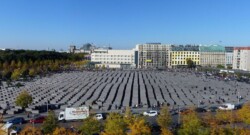
27th of January. International Holocaust Remembrance Day. Gregor (Germany) shares his thoughts on the art project YOLOCAUST.

#callItaly: Constitutional Referendum – Shifting Power and Supporting a Gang of Mayors and Regional Presidents?

Voters in Italy will have to decide about a constitutional reform on December 4th. The referendum, strongly supported by Italian PM Renzi, results in heated debates, also in our #callItaly, where our young voters share their fears that it will shift powers away from the parliament or will weaken Italy’s position in the EU.  “Cara Italia, hai voglia di cambiare davvero? BastaUnSì.” (‘Dear Italy, do you want to change really? A Yes is enough.’). This is one of the campaign-slogans of the government-led initiative for a radical constitutional reform in Italy. Most observers agree that Italy will change after a successful constitutional referendum, but whether this change would be positive or not for the country is discussed emotionally in Italian society. Within continuing economic problems and a strongly challenged administration not just because of the still relevant refugee and migration issue, but also due to a structure often not reacting appropriately on needs of citizens and economy, the actual center-left Italian Prime Minister Matteo Renzi promises to resolve many problems of Italian government with a successful referendum. The new constitution would change especially the influence and composition of second parliamentary chamber, the Senate (in Italian Senato), regionalizing it and reducing its competences in favour of the fist parliamentary chamber the so-called Camera degli Deputati (House of Representatives). Moreover it will give many competences (e.g. the competence for tourism) from the regions back to national level and abolish the administrative structure of the provinces, in favour of the municipalities and regions. Fears and Hopes While parts of the Italian society fear an unhealthy concentration of power in the national government, others hope to simplify political decision-making. If the referendum will get voters support or not, international media agree, it will have serious implications especially on European level. To get some personal insights we interviewed two young Italians – 21-year-old Leonardo Galanti from Rome, currently studying in Milan and Livio Warbinek, a 27-year-old PhD student from Trieste now living in Florence – to give us an insight into their perspectives. Here are their answers. Many Observers Agree That Italy Would Change After a Successful Referendum – in Which way? Leonardo: There will be for sure a huge reform inside Italian institutions. Despite the majority of the talk turns around the transformation of the Senate in a chamber of local autonomies, I think that the most important element of the reform is the redefinition of the relationship between central government and regional governments. A lot of important powers of the regions will be sent back to Rome and all provinces will be abolished. It’s a great reform of centralization that will make the Italian governments stronger in the future.    Livio: Actually, I don’t know. If you mean “successful” as a victory of “yes” and a new constitutional settlement, I am not able to answer in which way Italy will change. As an Italian, I know that often everything is modified and nothing changes. But that is a populist point of view. For sure, it will be a new political arrangement; new coalitions and the Camera dei Deputati will become more powerful compared to the Senato. But I am not sure that it is a good result. Maybe Italian political activity will be faster, without the power of Senato, but it is a danger for democracy, too. What is the Issue That Occupies you the Most According to the Referendum? Leonardo: I am disappointed by this reform, particularly about the Senate question. I would have really preferred its abolition instead of a survived senate empty of all its powers. I’m worried by the shift of powers that this reform will create. The government will rule over the parliament (the Prime Minster – during election – will literally “nominate” the deputies) while our constitution clearly wants the opposite: the citizens elect the parliament that expresses a government being dependent from the House. Livio: The issue that occupies me mostly is the new idea of political participation and representation in the (new) Senato. I agree with a federal organization of the Upper Wing of Parliament, but this law would build a crowd (maybe “gang”) of mayors, presidents of regions and local representatives without a real interest for their main occupation, and so without logic and a true federal organisation. The Italian Prime Minister Renzi Stated he Would (Probably) Resign, if the Referendum Fails. Would you Support this Move? Leonardo: It’s a stupid move that shifts the attention from the debate on the content of the reform to a judgement on the work of the government. As we’ve seen, he already understood his mistake and I don’t think he will leave in case of defeat. Livio: I am sure that if the referendum fails, he won’t resign. And your ‘probably’ in the question tells me a lot. Nobody believes in his resignation. Of course, I would support this move, but it won’t happen. If the referendum fails, we will probably have a new settlement of the Italian parties, new elections and a new government, probably less progressive or even worse… What Effect Would a “No” in the Referendum Have on Italy’s role in the European Union? Leonardo: Nothing will change, as with a No-victory nothing will change in the constitution, too. We will still have a weak position that isn’t caused by the institutional rules but by our big debt and slow economic growth. Livio: It depends on what Prime Minister Renzi will do. If he resigns, Europe will have a new government (or Prime Minister) wherewith to speak, talk and agree. Everything could change and Italy’s role in the European Union will be less powerful. If Renzi doesn’t resign, it will be worse: Italy would count less in the European game – but with the same politicians. Besides the Referendum, the Political  Debate in Italy is as well Dominated by anti-European Statements. Is it just the Politicians Moving Away From the Idea of Europe or the Majority of the Italians as well? Why? Leonardo: Italy today is a country that is changing a lot, politically, economically, socially and ethnically. This process started many years ago – the first V-Day / F***k off Day of M5S (the Movimento 5 Stelle) was in September 2007 – in a Europe well far away from the populist dangers of nowadays. I cannot say that the wave had started its march FROM Italy, but for sure IN Italy. Today M5S is the biggest Italian party, and will probably win next political election. Now, despite their sometimes inappropriate, extreme acting, they are really different from those right-parties who are rising everywhere in northern Europe and that in Italy are practically absent. Are they against the common currency? Yes, and that is an economic issue. Are they hostile to the actual ruling system of Europe? Yes, not because they’re against the European idea (as many neo-nazi similar-populist parties in Europe are) but because they would like to draw a new Europe, in some way more powerful and united than this one. As the M5S, we Italians are not against a European Union. We are against this union. Livio: I don’t want to believe that Italians hate Europe or that they want a sort of ItalExit. I think that it is very useful and accessible for Italian politicians to blame the European Union for all of (our) problems and political mistakes. Easy, but not true. But it is a problem of all European countries with anti-European statements: in Italy anti-Europeans focus on immigration, EU taxation and EU economic control. In the same way, all anti-European parties in Europe focus on the problems of their countries. It is a common problem for EU, not only an idea of Italians. Link: Official Text of the Italian Constitution in English  

#callBritain: Over and out?

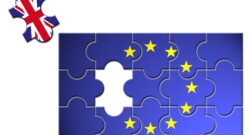
What exactly is going on in Britain? What are young people thinking about Britain’s future after the BREXIT-referendum? We decided to activate our European network and #CallBritain to ask two young voters to tell us about their reactions and their views towards the future.  The countdown has run down. All votes have been counted. Since Friday morning we have arrived at a turning point: The United Kingdom is going to leave the European Union. A majority of  51,9% followed Boris Johnson and Nigel Farage who fought for the so-called “Brexit”. David Cameron already announced to resign from his office in October with negotiations with the European Union on the “exit” of Britain starting only then. But not everyone has voted “leave”: Scotland, Northern Ireland, London, as well student cities like Oxford or Cambridge voted “remain”. Young people, especially, did not want to give up on the idea of Europe. To get some insights about how they feel after the result is out, we activated our European network and asked Leah, 22, a student of ancient history from the Rhondda Valleys in South Wales and Felicity, 24, a freelance journalist from Ayrshire in Scotland. They both voted “remain” last Thursday. By loading the video, you agree to Vimeo’s privacy policy.Learn more Load video Always unblock Vimeo How do you Feel About the Outcome? Leah: Angry and upset. I feel like we’ve been robbed and cheated – ‘we’ being the younger generation – by the elder members of our country. 73% of people in my age group voted to stay (only 40% of over 65s did the same), because this is our future, this decision is going to affect the rest of our lives. I feel scared for what the next few years may bring. When, how and Where did you Learn About the Outcome of the Referendum? Leah: I found out the news the way I find out most news – via Facebook. What was Your First Thought? Leah: Honestly it was “Well, sh*t.” How did your Region Vote? Did it Surprise you? Leah :The EU supported us a lot – but Wales voted ‘leave’.My region voted to leave – 52.5%. This really surprised me, because we are one of the poorest areas in the whole of the United Kingdom and we receive the most fundings from the EU – which we need. I thought that our community would realise that we’re better off with the Union. How Will the Brexit Affect you Personally? What Will Change? Leah: I have always been concerned about my future, jobs are hard to come by and prospects are never bright in my region. And now those prospects are even dimmer: Stepping out into the world as a new graduate I’m worried that I’ll be struggling… What Will be the Impact of the Result for Young People in Wales? Leah: Growing up in one of the poorest areas in Wales (and Britain) there was nothing to do; teenagers spend their days hanging around on street corners and setting mountain fires – because no effort is put into giving them something to do. Somehow now, the government has to spread its money across the country, and, as we’ve learnt in the past, they don’t seem to care about us and very little of their money seems to come our way. Nothing will be put towards youth centres or schemes which mean the younger members of the community will simply end up finding themselves in trouble.  Which of the EU’s Freedoms or Opportunities Will you Miss the Most? Leah: I will miss the relative simplicity of travelling. There are so many beautiful and wonderful places I dream of visiting (or re-visiting) and this is going to become a lot more difficult now. I will also miss being a part of a larger community; the United Kingdom joined the EU long before I was born, it’s an identity I’ve come to know. I will miss the European part of my identity. And I think I’ll miss that, being a part of something which connects so many countries and people.