Home » Archives for Camilla

Author: Camilla

Camilla (born 1993) is a student from Turin, Italy. Her interests include European History, German language and culture and backpack travelling. But everybody knows her for her unconditioned love for Thai food and energetic coffees.

Of Dogs, Virtual Discos and Civic Engagement. Young Europeans in Times of the Coronavirus Pandemic

The coronavirus is everywhere: in the news, on social media, our personal communication and even in our thoughts. High numbers of infected and dead people on the news frighten many of us as much as the lockdown impacts our societies, social and economic live. But this pandemic also brings solidarity and hope. Join us and get some personal impressions and little moments of light from our authors from all over Europe and beyond!

#livingMĂĽnster

#livingMünster: The “Heart of Europe” and its Positive Vibes

For young people across Europe the ERASMUS+ Programme is the chance to experience other Europeans countries first-hand. Camilla, a law student from Italy, thinks this is one of the EU’s greatest achievements. Back from two years studying in Germany, she reflects on the opportunities and challenges of her stay in Germany, about her discovery of another culture, about #livingMĂĽnster. “The generation of EU citizens”; this is something I hear very often about people born after 1990. I theoretically knew that it describes the irreplaceable luck of being “free to move”, to study, live and work in other countries far away from our hometowns, something most of our parents could not even dream of. But I never really realized how brilliant this gift was until I decided to actually live in another country myself. I always had an affinity for Germany, with its language, history and philosophy and already had some very close German friends. A passion for Kant, Nietzsche and Die BrĂĽcke’s paintings pushed me to Goethe’s homeland. I finally chose the small city of MĂĽnster, which I knew from History books (the famous Westphalia Peace was signed there), but had no further clue of how it would be like. Once I enrolled in an Italian-German double degree program and found a flat, this city was to become my second home for the following two years. Bikes, Grills and Christmas Markets The first weeks in September and October were inspired by my thrill of discovering every aspect of the new lifestyle and culture I was approaching. Coming from Turin, a big city full of traffic, I was very surprised to find out that my new hometown was the so-called German capital of bikes. The bike tracks were separated from pedestrian and car lanes, with even special traffic lamps and street signs. That made me enthusiastic: I had moved to a place where nearly everything was at cycling/walking distance, green areas were predominant on cars’ roads and bunnies jumped around flowerbeds. The whole thing was very new to me, as I was used to move around mostly by public transport.  But my new life in MĂĽnster meant also the first time living on my own. Sharing a flat with Germans made me learn about some interesting habits, like settling a Putzplan (planning which person is cleaning which room on which day) and wearing the Hausschuhe (different shoes you only wear inside). Of these shoes, you are not buying just your own but also providing an extra pair for visitors. Apart from my flat-mates, the first people I met were internationals like me, but the cosmopolitan and inclusive atmosphere in MĂĽnster soon brought me some German friends, whom I met at class and joining sport groups. When the days got shorter and colder, I experienced new traditions like the Christmas markets that are not emphasized that much in Italy. I found out eating a Flammkuchen (an interesting alternative to pizza, but thinner and crunchier) and drinking GlĂĽhwein (a hot sweet wine enriched with several spices, especially cinnamon) almost every day after classes was much more fun than I could imagine. From April onwards I discovered that a day off in spring/summertime in Germany means barbecuing, often accompanied by playing Buitenspeel (a team game consisting of throwing metal rings on wooden posts planted in the ground).  Working in Cass and Solving Cases I also experienced a different university system. Coming from Italy, I was used to frontal lectures with not much interaction and conceived studying mostly as an individual activity. I was surprised to find a different approach, with professors often asking for students’ opinions in class, a less theoretical way of learning law and smaller studying groups organized by the university in the afternoon. This gave me new instruments to reason and study differently, helping me to put what I was learning into practice and solving actual cases appeared in front of several courts. In the Middle of Europe Another thumb up for my two years in Germany: the easy way you can reach almost any place in Europe. Coming from a southern country, this was new and thrilling to me. It was great to find out how fast I could get to Paris, Amsterdam or Warsaw by bus, with trip mates as well as by myself. This way, I got the chance to explore many places in Germany and beyond and even travel to the Balkans with a direct bus. This latter trip was an unexpected chance, as I could get to Sarajevo with a low cost ticket and without changes, something I never found from Italy. My experience in Germany was sometimes challenging, but I definitely brought a lot of human and academic enrichment back with me. It helped me to realize once again what a big treasure Europe with its cultural diversity is, and how lucky we are to be part of the Erasmus generation and breathe it whole. #LivingMĂĽnster Where to go as foreigner to meet real MĂĽnsteraner? In the winter, definitely the Fyal, a very hipster and cozy bar in the old town. At summertime, any park with grilling space, especially the one around the Aasee or SĂĽdpark. What surprised you the most? The Promenade, a cycling track covered in trees that surrounds the old town. It can be used to move around, go jogging or chasing after bunnies nearby (for dogs especially). And the colors during the fall are beautiful. What annoyed you the most? How would you suggest another foreigner to behave, in order to avoid the same difficulties? Probably the bureaucracy, which resulted more complicated than what I expected. I’d suggest to find out as soon as possible which documents are required for your activity in Germany and to look for locals who could help with that. Usually universities have people appointed to help international students with such issues. 

Google + Edmodo

Happy Birthday, Google! Can the Search Engine Replace History Teachers and Libraries?

What is our first thought when we don’t know something? “Just Google it up!”. Google will celebrate its 20th birthday this year and it is undeniable that the search engine occupies a prominent role in our lives. But could Google (and technology in general) go further and completely replace libraries, archives or even teachers by becoming the sole instrument to research, teach and learn history? Could Google rearrange our knowledge about the past with their untransparent algorithm? Camilla Crovella from Italy reflects on these questions, after attending the Eustory Annual meeting in Turin on these topics. Happy 20th Birthday, Google! Researching is a fundamental human activity. Even if some of us would not admit it, nowadays most of us look first on Google to find something we don’t know. The largest search engine in the world is turning 20 this year. It has become our everyday soul mate, memorizing our tastes, reminding us of our timeline and showing us the directions. Smart glasses and watches aside, research is still Google’s bread and butter. And it is definitely still successful. According to a statistics by Interntlivestats, Google now processes over 3.5 billion searches per day and 1.2 trillion searches per year. It will be a satisfying 20th birthday: in 1998, after the launch, the number of searches was around 10 thousand per day (source: Internetlivestats). Can Google go Even Further? The question that comes to my mind is: can Google go even further? Could Google become the sole instrument to research, teach and learn history in a better way? Will it completely take the place of books and encyclopedias? And what about the fascinating libraries and paper archives? Is it their unavoidable destiny to become useless? Apparently, I am not the only one asking such questions. Digitalization is one of the main challenges society in general and teachers of history in particular are facing today. A group of teachers, historians and participants from the EUSTORY history competitions, under the patronage of the Körber-Stiftung and the Fondazione per la Scuola, met this spring in Turin to discuss these issues. One key topic was the possibility to use technology as a unique search instrument for historians and students. The Italian history competition decided in 2012 to encourage students to make use of sources available online to experience the possibilities and challenges of digitalization and to foster their digital literacy, i.e. their competences in critical analyzing information on the web (and elsewhere). Another question was whether history portrayed via movies, TV series and social media can achieve the same learning results as the old traditional book learning. Some Findings from Turin Some findings from Turin: first, Valentina Colombi, an archivist with a PhD in modern history who also works as a tutor in the Linguaggi Project at the Fondazione per la Scuola, presented her experiences in researching World War I. She and her students decided to explore digital sources related to the war and started with a Google search. They realized that the majority of websites and even digitized archive collections did not have accurate historical contextualization. For example, they found many pictures of soldiers in trenches. But no additional information, like details about the subject, the date or place the pictures were taken, was trackable via Google. Challenges in Digital Research: The Role of Libraries and Archives The same was true for films. Still they found some more reliable websites, but only after a very detailed search via Google. The ordinary search engines (Google, Yahoo etc.), digitized archive collections and the internet in general can be useful as tools to involve students, showing for example soldiers’ life conditions inside a trench during WWI. But Valentina Colombi is convinced that “at least for now in Italy you still need libraries and archives for the real historical documentation and contextualization even digitized collections too often do not provide”. “Thus-she concluded-libraries and archives are not useless in the future because of their longstanding experiences and techniques to secure the reliability of historical sources”. Edmodo: A Platform for Collaborative Historic Research Valentina Colombi also introduced Edmodo, a platform where students and teachers from different Italian schools can share documents and ideas and conduct mutual historic research. Edmodo was also an important working tool for two students from Piacenza, who presented the product of their work for the Eustory national competition: digital comics about Kamikaze during WWII. “This innovative way of relating to history definitely made us feel more empathy and eventually keep the stories we researched in mind, like we had experienced them ourselves”, they reported. That would be hard to obtain from book studying. After reading these lines, some may think I’m supporting the idea that “watching the movie is the same as reading the book (but more relaxing)”. A contradicting example was given in the last presentation about an English TV Series, Peaky Blinders. This show is set in Birmingham during the 1920s (some years after the end of WWI) and focuses on the Peaky Blinders gang and its boss Tommy Shelby. The gang reacts to the poverty deriving from the war via violence, Tommy and other members suffer from psychiatric diseases caused by the fighting in the British army. Balancing Entertainment and Historical Accuracy What caught my attention was the theatrical way in which historical events were presented. The reality the show describes seemed close to the historical one, but the language, the characters’ behaviors and personal issues got – in my opinion – too much space compared to the historical setting. The explanation is obvious: it is a show. That is why it is theatrical, why it emphasizes characters’ portray and why it cannot be taken as the only relevant source to learn and teach history. Nevertheless, a series like Peaky Blinders can be a starting point for further exploration of times past. Technology in Historical Research This last statement about cinematographic representations of history brought my mind back to the wider category it belongs to: technology. Technology offers several instruments to research, teach and learn history; one of the most common among them is definitely the birthday child Google. Experts’ opinions during the conference and some reflections on my own brought me to believe that those instruments are, at the moment at least, not accurate enough to take the place of traditional sources of information and emphasize the need for critical source analysis. For sure, technologies like the Google search engine bring many advantages to our lives, first of all giving access to a wide range of information to many people. Accurate teaching and learning of history can benefit from digitalization but not be solely built only on such instruments. So Happy Birthday, Google, let’s go back to the library!

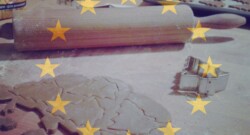
From South to North: new-old European Winter-Time Recipes

Christmas stories and recipes from Europe and beyond to make you laugh and that will keep you warm during the cold winter days. Are you into baking? Try these recipes!

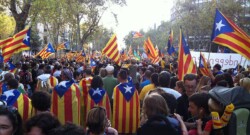
Catalonia: Outbreak of Illegal Nationalism or Oppression of a Democratic Movement?

People being beaten up by the police just for trying to vote, a government which declares a referendum binding even though parts of the electorate where not able to vote and a large number of ballots where confiscated, and finally nearly the whole democratic elected government either in prison or in exile – the events around the Catalan independence referendum where unexpected and incomparable to any political development the old EU member states experienced since the end of the dictatorships in the South. Camilla Crovella from Italy tries to find explanations for these developments and looks also for future solutions by asking students both from Catalonia and Spain about their views and opinions. The Catalan Point of view Joaquim Candel (22), Economics student from Barcelona and active member of the Catalan Movement for Independence and Nil RedĂłn Orriols (19), Maths student from Barcelona, present their different opinions about the topic.   The topic of Catalonia’s call for independence is not new in contemporary Spain. What was your opinion about this topic before the events of the last month? What do you think has changed now? Joaquim: The judgement of the Spanish Constitutional Court from 2010 was without doubt a point of inflection. It declared the invalidity of several parts of the Catalonian Statute of Autonomy, including the article that defined Catalonia as a nation. Since then, a sentiment for independence has increased. The current referendum is nothing new. There have been two attempts in the last two years. What is different now is that the Catalan Government announced that the result would be binding. Nil: I have always been neutral on this topic, as I thought that both parts had their right. Currently, I still think the same. But neither the Catalan nor the Spanish Government have taken the right decisions to solve the conflict in the past. They have always remained inflexible in their position until they came to the open-field hit. Joaquim: “Catalonia was independent before Spain was reunited”. Differences Between Catalonia and Europe Do you see cultural, social or economic differences between Catalonia and the rest of Spain? If so, could you give some examples of it based on your personal experience? Joaquim: To start with, Catalonia was an independent country before Spain was reunited. It has always had a distinct language, its own culture and identity. In the last centuries, it has positioned itself as one of the most economically developed regions in Spain and main exports region. Nevertheless, Catalonians have always felt mistreated by the Spanish Government when it comes to redistributing wealth. This year, we have been the 4th region in terms of contribution to GDP per capita and the 14th in terms of expenditure. Also, we suffer from the highest university fees, have the poorest motorway net, the highest public debt. Even key infrastructures, promised by the Spanish Government, such as the North Sea-Mediterranean Corridor, have not been completed. This is creating a huge sentiment of unfairness. Many think Catalonia would be much better off if it could administrate its own resources and spend its taxes. Nil: Obviously, there are differences. In Catalonia, we have our own language, although it coexists perfectly with Castilian. Economically, we are one of the most prosperous areas of Spain and socially, we have our own traditions and national celebrations. I believe that after all each Spanish region has its peculiarities, and it depends on each person to decide whether those existing differences are strong enough to consider us as a different nation from Spain, or if on the contrary the similarities with the rest of Spaniards are stronger. How do Catalans Identify? The Referendum is neither foreseen by the Spanish constitution, nor authorized by the Spanish Government. What do you think about Rajoy’s Government’s decision to coercively forbid the access to polling stations? Do you think the Government could have claimed its sovereignty on the Catalan territory in a different way? Why/Why not? Joaquim: I think this can be questioned. Article 92 of the Spanish Constitution clearly states that the King can call upon a referendum on political decisions of vital importance. Many Constitutionalists and even the Constitution’s authors have repeatedly stated that a referendum on the independence of Catalonia would be perfectly legal. It is not a legal problem, it is a political problem. The brutal use of force was planned (10.000 police officers in addition to those normally assigned to Catalonia were sent by the Spanish Government). “It was Cleat that the Referendum was Illegal” More than 10.000 citizens were wounded. One of them was my 76 year old grandfather, who was hit just because he was bringing food for the volunteers at the polling stations. National and international media recorded videos from the aggression and it is difficult to affirm that the use of force was proportionate. In my opinion, this shows that Spain can only control Catalonia through the use of force. The Spanish Government could have instead start a negotiation with the Catalan people by making a proposal on the future of Catalonia. Nil: The decision to attack the citizens in the way the Spanish Government did seems to me regrettable and very inappropriate for any government. It was clear that the referendum was illegal (also because the Spanish Government made no effort to negotiate), so they could have just let it happen and then declare it invalid, and they would have been right. But by acting as they did, many neutral Catalonians turned against the central Government. They do not feel represented by a government that attacks them in this way. Views on Voting Did you decide to vote? Why/Why not? Joaquim: I voted, because after 40 years of dictatorship, it is my duty to exercise my rights. Even if I would have not supported the independence, as I do, I would have voted, because it is my right to do so. Nil: I decided not to vote. The days before the referendum I convinced myself to vote, since the Spanish Government wanted to prevent us from expressing our opinion. I did not agree with that and I did not want the Government to achieve its purpose. But when the day came, my mind was not clear, and I thought that such an important issue should not be decided in those circumstances. The events of the previous days pushed me to vote YES, but I thought I needed to reflect more on that decision. In addition, the Guardia Civil carried out a disproportionate violence in the center where I should have voted. I decided not to vote, partially because of my unclear mind about what to vote and partially to avoid the riots. First reactions to the Referendum What was your feeling on the Referendum day? What was your reaction after the result was announced? Joaquim: I woke up very late and was astonished by the brutality of the images and videos I watched on TV and in different WhatsApp groups. Despite the fear and risk of being attacked, I voted and stayed in the electoral voting points to avoid a potential entrance of the police forces. Fortunately, they did not come. I was very happy about the final result. Nevertheless, I was frustrated about the fact that 600.000 votes were removed by the Spanish police and could not be added into the official count of 2.1 million. Nil: I felt very sad and angry, seeing that the forces that should defend us (National Police and Civil Guard) held violence against us. This because our politicians were not able to reach an agreement to make a legal referendum. It was very clear that the result would be YES, since the people who supported NO did not go to vote. I was not surprised by the result. Nil: “The best possible solution would be new elections in Catalonia and in Spain.” The Current Situation What is your opinion about the situation right now? What would be in your opinion the best solution? Joaquim: Currently, eight Catalan Ministers are in prison and the President together with the remaining three Ministers are in exile (in Belgium. The Belgian Public Prosecutor claimed for Puigdemont’s and the other Ministers’ arrest. The judgement is expected on 4 December. Further information here, ed). In addition, the Spanish Government is forcing an election in one month with the rivals in prison, something that is unimaginable in any democracy. The main leaders of the Catalan Civil Society are also in prison. The only solution is a European intervention, to release all political prisoners and monitor a binding referendum on independence. Nil: The current situation has no solution. We need to start over. To me, the best possible solution would be to call elections for new governments, both in Catalonia and in Spain. Then, to make a legal referendum to allow everyone to expresses his or her opinion freely. In such case, if the majority wants the independence, then that decision must be obeyed. Both governments should start working on that purpose, until achieving a peaceful and advantageous, although difficult, separation for both parties. If instead, the majority will express against it, Catalonia should remain part of Spain. Unfortunately, I do not think this is possible, because I see little willingness to change positions on both sides. The Spanish Point of View: A Problem for Spain and for Europe Elena Sokolwski Barron (21), Veterinary student from Seville and Isabel MartĂ­nez JimĂ©nez (21), Journalism and Communication student from Seville, present their point of view as Spaniards on the Catalan issue. The topic of Catalonia’s call for independence is not new in contemporary Spain. What was your opinion about this topic before the events of the last month? What do you think has changed now? Elena: Honestly, this topic has always existed along Spanish history. The Spanish government has always invested many resources in Catalonia, trying to silence them, but it never worked. What happened last month in the region is an extreme radicalisation, confusion and desperation. Radicalization, due to a violent aggression from the Catalans standing for the independence to those who are not. Spanish flags and King’s pictures were burnt, speeches were held from the regional Government against the Spanish nation and so on. Confusion, because for the rest of Spain has been quite difficult to deduce what was going on. The process from an ideological conflict to a material one has soared too fast. Finally, desperation, considering that this independent movement wants to achieve its goal irreversibly, with no more space for compromise. Isabel: I thought that Catalonia could be a relevant problem for Spain if the two Governments would not start a dialogue. Now, I think Catalonia is a real problem, not only for Spanish people, but also for Europe. Before last month, I compared Catalonia to other regions that want more independence from the central State. However, it is a fact that since a few years ago, Catalonia has become one of the most important issues to deal with for the Spanish Government. Differences Between Catalonia and Europe Do you see cultural, social or economic differences between Catalonia and the rest of Spain? If so, could you give some examples of it based on your personal experience? Elena: Yes. That’s part of Spanish diversity. The most evident difference is the language (they usually speak Catalonian instead of Spanish). It happened to me a few times: I asked something in Spanish and received the answer in Catalonian. Isabel: It is obvious that there are differences between Catalonia and the rest of Spain due to the historical past events. When Francisco Franco proclaimed the dictatorship in 1939, the autonomy of Catalonia was suspended. Catalan people couldn’t speak their language either. When Franco died, autonomy was re-established: the current Statute of Autonomy of Catalonia was approved in 1979. Since then, the feeling of nationalism has grown in Catalonia until today. Economic differences are also important. Catalonia’s economy is the strongest in Spain. However, the Spanish Government has invested many resources in Catalonia (along with Andalusia). In my opinion, Catalonia gives a lot to the central Government in economic terms, but also receives investments in return. How do Catalans Identify? Would you say, as a Spaniard, that Catalans cannot identify themselves in the Spanish State? Why/Why not? Elena: Catalonia is now divided. I think the vast majority of the Catalan people feels both Catalan and Spanish. I suppose these people consider their double identity as a part of themselves as Spaniards and of the Spanish history. The pro-independence Catalonians consider themselves as completely different from the rest of the Spaniards and think Spain has stolen their identity. This is somehow understandable, as Catalan people usually grow up speaking a different language and practicing their own customs. Isabel: Catalonia is a region like any other, so if other regions can feel they are part of Spain, why not Catalonia? It is a matter of coexistence: united in diversity. It is true that they have their own customs, but Spanish traditions are also Catalan traditions. “Each part has its share of responsibility” or “It was morally incorrect not to allow the Catalonians to vote – but Spanish Government has to enforce the law”. First reactions to the Referendum How did you react when the referendum was first announced? What was your first prevision on the consequences of this announcement? Elena: I thought the Catalan Government was just re-proposing the same complains over again and that they would have stopped soon, as already happened in the past years. Isabel: When the referendum was first announced I felt surprised. I thought that the events were being precipitated by the pro-independence forces. However, my expectations were not good, considering the background of this topic. Firstly, the referendum was illegal. Despite this, it is true that the Catalan Government had requested a referendum in several occasions. The central Government always declined the request. Therefore, indifference has been the greatest ally of this whole issue; but forcing a referendum could not have a good ending. At this point, we can say that each part has its share of responsibility. Inhumane and Morally Incorrect Moves The Referendum is neither foreseen by the Spanish constitution, nor authorized by the Spanish Government. What do you think about Rajoy’s Government’s decision to coercively forbid the access to polls? Do you think the Government could have claimed its sovereignty on the Catalan territory in a different way? Why/Why not? Elena: I think it was inhumane and morally incorrect not to allow the Catalonians to vote. On the other hand, even if I don’t agree with the police’s violent attitude, I also think it is a duty of the Spanish Government to make the Law be respected on its territory. Isabel: Nowadays, democracy is hurt in Spain. People should vote without violence, always in a legal way. I think the police’s intervention was wrong. I also know that they didn´t find any other fast solution to stop the referendum (and the Catalan Government was not willing to back down), but the action of the police wasn’t the most appropriate. I think that, if the Spanish Government had allowed this referendum and declared it illegal (and therefore invalid), the process would have been easier. What is your opinion about the situation right now? What would be in your opinion the best solution? Elena: Right now the situation is quite confusing. Puigdemont has left the country, like if he escaped from the monster he created himself. I think this demonstrates that a real independence for Catalonia is inconceivable. Isabel: On one hand, I think both Governments must be renewed; it is necessary to call for new elections. On the other hand, it would be convenient to focus on the advantages and disadvantages of Catalonia’s separation from Spain. In this way, Catalonians could re-consider their ideas about the benefits of a future separation.

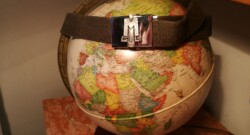
The “Re-Unification” Belt. When Human Solidarity Overcomes Military Division

Remembering World War II is difficult in many countries. In Italy, however, the narration of “us” against “them” is even more difficult, since the country was not occupied by enemies, but Benito Mussolini was a strong ally of Hitler’s Germany even before the war. Only when a new government ousted Mussolini in 1943, German army occupied Northern Italy. In this part of the country, partisans raised and fought to release their country. Camilla Crovella’s family keeps a personal treasure as memory of those fights. A Gift of Friendship When my grandfather and his sister are describing this two years of occupation, known as the “Resistance”, they mention a general atmosphere of fear, poverty and lack of information. My grandfather was a primary school student during war times, his sister already was in high school. In 1945, my grandpa attended the third class and used to spend his afternoons either playing with other children or helping his mother with housework. Additionally, he listened a lot to witnesses from the battlefields and became fascinated by the figures of the partisans (the volunteer soldiers fighting in the resistance against fascists and nazis) and the war tales behind them. For his great interest in those stories, my grandfather became closed to one of them, Giuseppe, whose courtesy and kindness he still remembers today. The belt he donated to my grandpa is one of the most precious family memories we have. It was a curious object to be worn by a Partisan, as evidently part of the Fascist Army’s supplies. This could be seen from the buckle, decorated with an M (for Mussolini), the Fasces (symbol of the Fascist Regime) and the acronyms GIL (indicating the group of the Fascist Youth Movement). Bonds of Compassion Giuseppe told my grandpa that the belt was a fascist soldier’s gift, whom he met, wounded, after a battle. He helped him to reach the nearest Red Cross center. As the soldier’s leg was hurt, Giuseppe had to carry him on his back for half of the way. Giuseppe was from Southern Italy and he became a friend to my grandfather when he was hosted in 1945 in our family house in the countryside, where my grandpa, at the time 7 years old, his sister and his mother moved in 1942, after the Allies’ huge bombing operation on Turin. When Guiseppe left our house, after the Liberation of Northern Italy in April 1945, he donated his belt to my grandpa. This encounter was extremely meaningful for my grandpa, as it helped him to answer questions he had about those partisans, which animated his curiosity, but whom he had never seen. A Symbol of Unity: Giuseppe’s Partisan Belt and the Lesson of Human Solidarity” For my grandpa, as for the many other civilians, partisans were some sort of a legend – some were not even sure they actually existed. And even if they were the “good ones”, it was especially difficult for my grandpa’s family that always had great faith in the Italian monarchy, to consider a power not codified in the traditional ruling system as something to trust in. It was only when they met Giuseppe that they changed their mind. They understood the Partisans were brave citizens who had decided to raise against the oppressors and reconquer their country on their own. And, as Giuseppe’s belt witnesses, they were not fighting just for themselves but for every Italian, even those still supporting the Fascists. That is why this belt is a very meaningful memory for my family. It doesn’t only remind us of Giuseppe, but it is also historically and humanly significant. For my grandpa, as probably for Giuseppe, it means that war declarations cannot overcome human solidarity; that people from different formations can give up their ideological differences and help each other. My grandfather’s message is strong ideologically unbreakable, but this kind of human solidarity is very rare in reality. One good example is the migration topic: instead of showing solidarity, the major response in Europe is closing the borders. In other cases, like in Italy, many citizens deny the right to integration for them. Italy is neither divided nor at war today, but I think it would still need some of his fraternal spirit my grandfather has experienced.

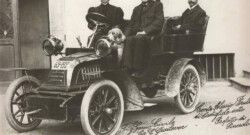
Ernestina Prola in her car, 1910

Licensed Women: Ernestina Macchia Prola and the Right to Drive

Our History Campus author Camilla tells the story of the first Italian woman to get a driving licence in 1907. Meet Ernestina Macchia Prola.

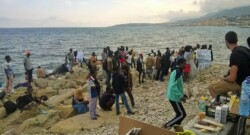
Migration: An Over-National Responsibility

Camilla Crovella, a young Italian, calls for solidarity and a comprehensive reform of the European approach to refugees.

  • 1
  • 2