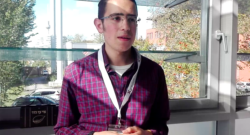
Going to the synagogue three times a day, praying with a branch of a palm tree and eating kosher food. Orthodox Judaism demands many rules to be obeyed. Shahar from Israel, an orthodox Jew himself, explains how he managed to keep his lifestyle while attending the EUSTORY Summit:
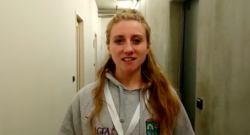
Driven by their passion for history more than 100 young Europeans made their way to Berlin, against all odds: storm Xavier devastated northern parts of Germany cutting of train connections to the German capital. Five participants told us why history is important to them. Anete, Latvia Elvira, Russia Andreas, Belgium Sarah, Ireland Pauline, Germany
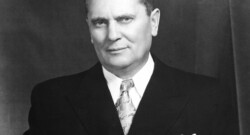
Regardless of whether they were on their way in the city, at work, at home or hanging out with friends on the playground, the vast majority of the population of the former Yugoslavia still clearly remembers where they were, what they were doing and how they felt the moment they found out that Tito died. Reflections on Tito’s Legacy in the Balkans We are starting our new column in the Southern part of Europe, in the Balkans, with the question »Where were you when Tito died?«. The decision for this particular question and topic was made based on the fact that the recently bygone 25th of May used to be a major celebration of Tito’s birthday in the former Socialist Federal Republic of Yugoslavia (SFRY), called the Youth Day, in which Tito was of course the main and central* figure. Even nowadays, 37 years after the last celebration he attended, some people all over the nowadays sovereign states of the former federation, still celebrate 25th of May and many former Yugoslavs still nostalgically remember the date as the Youth Day. Because of the importance Tito’s figure had in people’s lives, we wanted to know: Where Were you when Tito Died? The president of the former state of Yugoslavia, Josip Broz Tito is undoubtedly a controversial figure with a strong personality cult, who in one way or another marked lives of generations living (between 1945 and 1980) in one of the six republics that made up the federation. Due to the strong personality cult and his political as well as social role, his death represented a big change, and for a major part of population also a kind of an emotional shock. Consequently, majority of individuals, former Yugoslavs, belonging to generations of our parents and grandparents (the so-called generation X, and the generation of baby boomers), clearly remember the 4th of May 1980, the day that Tito died.** Milena (*1966, Slovenia) It was a regular Sunday evening. I was at home, watching TV, when the programme was interrupted and the then very famous and respected TV presenter TomaĹľ TerÄŤek announced that Tito died. I still clearly recall that image on the TV, his serious face expression, his voice and the words: »Umrl je tovariš Tito.« (»Comrade Tito has died«). It was an extremely sad atmosphere – I cried, beacuse I liked and cared about our president. There was also the feeling of confusion, due to the fact we lost the president that played such an important role in SFRY. Without him Yugoslavia was practically unimaginable. RuĹľica (*1967, Bosnia and Herzegovina) It was Sunday, 4th of May 1980, 15:15. I was thirteen years old. I remember that I was in a stadium with my father watching a football match of the local football club. Suddenly the match stopped. Someone screamed: “Comrade Tito has died!” I started to tremble and cry. People left like there had been a storm or an aerial bombardment. All of a sudden, streets turned empty. I was scared. Terrified I rushed home and stood in the courtyard for a while. Then I went to my room, hid my head under the pillow and cried as if my own father had died. Franc (*1937, Slovenia) I heard about Tito’s death over the special TV announcement in the evening on the day he died – it was 4th of May 1980. It was bad news, but I did not cry, why would I? His death was expected , since he was old and sick for months. I remember that the whole country was basically preparing for the bad news about his death long before. Already in February, when there was traditionally a big Shrovetide festival in the city of Ptuj, the carnival parade was cancelled as a precaution measure in case Tito died during that time already. Zumreta (*1963, Bosnia and Herzegovina) I remember I was in a tram returning from school, thinking about exams and my studies. Back then I was seventeen years old. There was background music in the tram, when all of a sudden the radio program was interrupted. You could only hear a sad voice announcing the death of our president Josip Broz -Tito. The tram stopped, and for a moment people just stood there, shocked, not realising what just happened, when the first passengers started to cry. This is a moment I will never forget, particularly as it happened in the same month, in which we usually celebrated Tito’s birthday with a rally, where we from hand to hand passed on a baton, which with great warmth and love travelled from villages to cities. Husein (*1959, Bosnia and Herzegovina) The day when Tito died, I sat in front of the television with my grandfather and my grandmother. We watched a TV-broadcast on agriculture, when all of a sudden the music stopped and a black banner appeared on the screen. A voice announced Tito’s death. My grandmother then said: “Finally he has died, this old dog.“ My grandfather replied: “Mind your words, or you will end in prison, you old crone!“ Both my grandmother and grandfather were not supporters of Tito or communism due to various reasons, one of them was the ban on practicing religion openly. I myself was not unhappy about his death but we had to be quiet and careful, as there was a lot of police and spies. Marija (*1942, Slovenia) I remember we were watching TV in the evening when the broadcast was suddenly interrupted. The news presenter told us that Tito died earlier that day in a hospital in Ljubljana. I burst into tears. We were all very sad. The next day, on Monday, at work, we were eagerly listening to the radio and later at home watching TV news in order to hear more about Tito’s death and what is going to happen next. WHERE WERE YOU WHEN…? Certain events from the past represent historical turning points, which made a strong and unforgettable impression in people’s minds the moment they happened. We are highly interested in the diversity of personal experiences and perceptions of the selected and influential historical moments, so we decided to first ask the question Where were you when …? ourselves and now strongly encourage as well as invite you to do the same. The purpose of this multidimensional* segment is not to discuss or analyze those events but to rather acknowledge and show their importance for individuals who witnessed historical movements and changes. Thus we invite you to consider the 1st dimension of the segment and present our readers how a particular historical moment became engraved in your mind – or/and in the minds of people you choose to interview – in such a manner you/they still recollect when, where and how you/they heard about it and how it made you/them feel back then.  * They meant that quite literally – on the last Youth Day celebration in 1979 participants/performes sang a song »Tito is our sun« (»Tito je naše sunce«). ** In order to get a glimpse of on what scale his national as well as international political influence was and consequently what a major event his death was you can watch this video of Tito’s funeral on the 8th of May 1980. Since Tito died in Ljubljana (Slovenia), and the funeral took place in Belgrade (Serbia) the capital of Yugoslavia, his body was transported from Ljubljana to Belgrade with a special presidential train that was on its way greeted and welcomed by the people paying respects to Tito. Historically the most interesting fact about his death is probably the largest number (127 represented countries) of foreign statesmen and stateswomen in history – from both sides of the iron curtain – attending the funeral. The internationally interesting crowd of statesmen and stateswomen consisted among others from Margaret Thatcher, Sadam Hussein, Eric Honecker, Helmut Schmidt, Yasser Arafat, Indira Ghandi, Leonid Brezhnev etc.
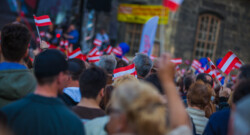
What exactly is going on in Austria? What are young people thinking on the candidates and Austria’s future? We decided to activate our European network and #CallVienna to ask two young voters to explain their choices. The countdown is running. Until Sunday. In the evening we will know who will be the next President of Austria. The President of Austria is not as powerful as the French one, but he has an important symbolical function and political voice in the Alpine state. “Willkommenskultur” or a culture of welcome and the closure of the Balkan route have marked internationally noticed political decisions of this little country. Now it seems that the right-wing candidate for President Norbert Hofer might win the run-off of the elections. His rival is the former head of the Green Party, Alexander Van der Bellen, who is now running as an independent candidate. That those two are in the final round and beat the candidates of both the moderate conservatives (Ă–VP) and the social democrats (SPĂ–) would have been beyond imagination some years ago. It means that Austria, which is governed by a so called “grand coalition” of Ă–VP and SPĂ–, is polarised already before the run-off ballot. First we asked Benjamin, 21, a student of history from Vienna. Why are you Voting for Van der Bellen? The election campaign was held in a strikingly unobjective way. Nearly all candidates promised things that they could not even realise theoretically if they were elected as President. Especially in terms of the refugee crisis they worked with incredibly emotionalised contents. In so far it is understandable that the two most radical candidates could qualify themselves for the run-off. Hofer wants, according to himself, to reform the office, to intervene more actively in daily politics. Many of his followers see his election as a protest against the establishment and the policy of the two main central parties. I think it is very important that somebody prevails who acts level-headed and does not divide the population, especially in such a charged situation. I am going to vote for Van der Bellen because he seems to be the lesser evil. I think it is essential for a President to prove himself as a bipartisan keeper of our constitution and not, as Hofer announced, somebody who plans to strengthen the back of the FPĂ–Â . “I am Supporting Hofer” Martina, 23, a student of political science from Vienna, supports the FPĂ– candidate: I will vote for Hofer, because of my dissatisfaction with the current government and the disbelief in the policy-making of the Green Party in Austria . In addition, Austria needs sharper sanctions and laws in asylum policy and tighter border controls. Without valid identity documents there should be no entry into our country, because protection of the population must have priority. Perpetrators, who committed multiple criminal offences, should immediately be deported or arrested and should not move around freely as before. I see no endangerment of the people with no Austrian citizenship, who are integrated in society, live and work in Austria and pay their taxes, by the election victory of Hofer – but rather by the threat of the increasing refugee influx. To ensure safety in our country, Austrian policy should at least establish a ban on going out for male asylum seekers for a certain time of the day. Examining Hofer’s Stance: Women’s Policy and EU Accession Negotiations Regarding women´s policy Hofer is not a big fan of abortion, which represents my belief. He doesn´t want to completely ban abortion, but to rather give pregnant women a reflection time of one or two weeks to think about their decision. If you ask me, this policy doesn´t restrict women´s freedom of decision and doesn´t represent a traditional picture of women in general, because first it is all about the unborn life and not the woman. Regarding the negotiations on the accession of Turkey to the EU, Hofer stands for a referendum as an instrument for more direct democracy in contrast to Van der Bellen. Hofer is a middle aged person, who can emphasise more with the people and thinks differently than his twice as old opponent. Van der Bellen does not accept 36% of his population, because of his statement that he wouldn´t accept a FPĂ–-led government. In my opinion, this argument contradicts with the democratic mind-set of a President. How will This Election Affect the Future of the Austrian Society? Benjamin: No matter who is going to win, we will have to deal with a polarisation of society. Hofer is a German-national militant member of a fraternity which has a disturbingly strong connection to the extreme-right. He knows that his party is leading the pols vastly superior at this moment and would probably try to provoke re-elections to put the FPĂ– in power. I fear the restructuring of the state from a democracy to an autocracy, as it happened in Poland or Turkey. Van der Bellen, who is a left-wing politician, claimed he would not swear a FPĂ–-lead government in, even if they reached the majority vote. A measurement some citizens regard as undemocratic. With these points of conflict, the presidential-vote degenerates to a vote on the legitimation of the FPĂ– and their contents. A situation the FPĂ– can only profit from, unfortunately. Martina: With Hofer as president, we will most likely have new elections, whereas with Van der Bellen the government will remain the same. In case of Hofer’s victory, I hope that there will be premature parliamentary elections and dissolution of the current government within a few months. Furthermore, I hope that the possibility will emerge for the FPĂ– to take over the government and change the current policy in advantage of the people living in Austria.
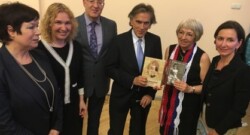
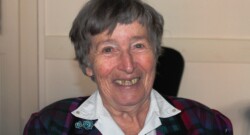
Michaela Vidláková did not have the childhood you would wish to have. She and her parents were imprisoned in TerezĂn (Theresienstadt), because they were Jews. They were lucky; the three of them survived, but exclusion and internment strongly shaped Michaela’s attitude towards life. Haris Huremagić had the chance for an interview.
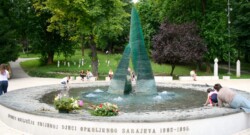
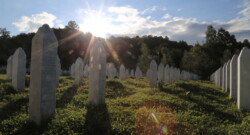
Haris, an Austrian with Bosnian family-roots, shares his view on why remembering Srebrenica is crucial for ensuring a better future.
For privacy reasons we have recently changed all usernames. Please use your email address to log in.